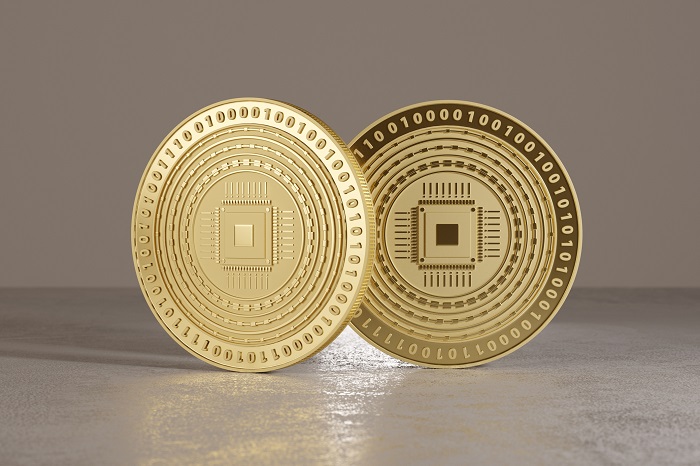
Within the past 12 months alone, bitcoin has gone up in value by a staggering 942% against the dollar, trading at around $695 last November to its current price of $7,246.
Its meteoric appreciation has further altered the public perception of the cryptocurrency from niche property of basement dwelling tech geeks to a fully-fledged monetary unit and, what some would argue, an asset class in its own right.
Higher valuations have given the bitcoin greater credibility in the marketplace, triggering waves of initial coin offerings (ICOs) or cryptocurrency fund-raisings. Hundreds of brands and retailers, like cosmetics retailer Sephora and potentially Amazon, are jumping on the crypto bandwagon, accepting the currency as payment for gift cards.
While the mainstream enthusiasm for bitcoin and other digital tokens like it has never been higher, the investment industry remains highly sceptical.
After the Chinese government issued a ban on bitcoins and other cryptocurrencies, asset managers were particularly keen to weigh in with their own two cents and chime in with “I told you so”.
Although the cryptocurrency mania has “credible roots”, the current craze boils down to a fear of missing out (FOMO), John Wyn-Evans, head of investment strategy at Investec Wealth & Investment, noted at the time.
“I can see why people might want to buy some as an option against the tail-risk of cryptocurrencies becoming the norm – even if governments, central banks and banks are going to fight it tooth and nail. A misdirected nuke from Kim Jong-un could be the catalyst. But it is certainly not an asset class in its own right, as some of the more over-excited supporters claim.
“It is inevitable that we will hear more stories about people who have made a fortune, just as one hears of people who bought Apple or Amazon for peanuts,” he continued.
“Do you feel visceral regret at having missed those opportunities, and would you have bet the farm on them? I think not.”
Even the Wolf of Wall Street, Jordan Belfort, has weighed in on the cryptocurrency craze, calling ICOs “the biggest scam ever” that is bound to “blow up in … people’s faces” in an interview with the Financial Times.
Part of investors’ reservations around cryptocurrencies and blockchain stem from the fact that they don’t really understand it. So, let’s demystify this new-fangled, high-tech coinage, shall we? For the sake of simplicity, I’m going to limit the discussion to the most well-known of the cryptocurrencies – bitcoin – although, there are literally thousands of strains of digital currency, many of which are gaining brand recognition (litecoin, ethereum, etc).
So, what is a bitcoin?
A bitcoin is the first digital, decentralised currency. Unlike other forms of currency, bitcoins do not fall under the jurisdiction of governments or central banks or any other kind of central administrative control. Transactions between users take place directly (peer to peer) without an intermediary, are verified by network nodes and recorded in a publicly available distributed ledger or blockchain.
There is a finite number of bitcoins in the system – 21 million, to be precise – another sharp contrast to the quantitative easing measures adopted by central banks post-financial crisis.
Another hallmark of bitcoins is that they are fully transparent and also fully anonymous. Users can track the movement of bitcoins from person to person without being aware of their identities, which are a randomly generated string of computer code.
Out of the dark web and into the light
Like any other currency, bitcoin is used to purchase ordinary goods and services. Fun fact – the first ever documented transaction using the cryptocurrency was back in 2010 when a user by the name of Laszlo Hanyecz bought two Domino’s pizzas for 10,000 bitcoins.
But it has also provided the perfect cover for online criminal dealings, allowing users to anonymously swap bitcoin for drugs and other illicit paraphernalia as famously happened on the now defunct Silk Road.
On the surface, it is understandable why investors have been so reticent to get involved in the cryptocurrency movement. Bitcoin and its ilk are currently unregulated, nor is there a third party to underwrite your loss in the event a deal goes sour.
As mentioned, there are also thousands of these currencies in existence, which Wyn-Evans believes is “the most disturbing aspect of the story”.
“I suppose they could all be acquired for bitcoins, but more probably they will be worthless. And there is no impediment to issuing these things through what are known as initial coin offerings (ICOs), which lends them a spurious air of respectability.”
However, Alliance Bernstein analysts Gautam Chhugani and Gaurav Jangale argue that the Bitcoin protocol has heralded a shift toward a new decentralised, incentivised economy or Tokenomics.
The new economic order will have an indelible impact on all facets of financial services and corporate life, from entrepreneurs to institutional investors and the incumbent banks.
“Incumbent banks need to smell the coffee,” they write. “Their core clearing ledger function has been decentralised away by the bitcoin protocol. Does it have implications for their custody business? Does it have implications for global remittance business? Can bonds be issued on the blockchain?”