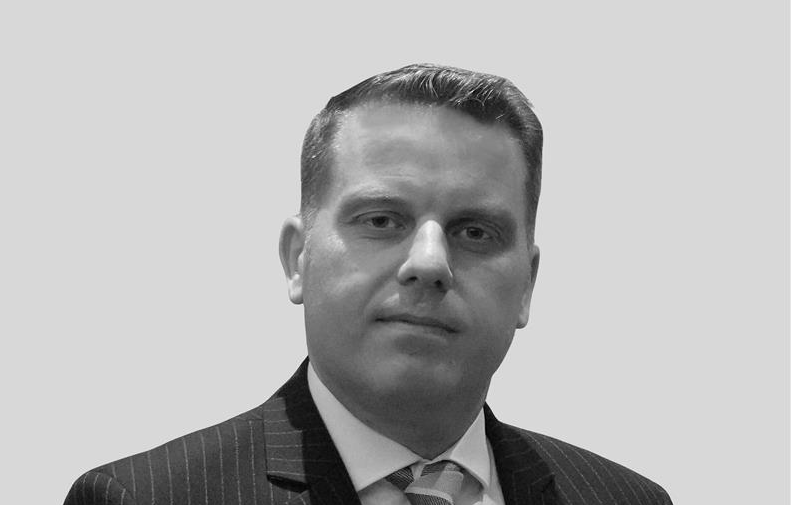
When international advisers ask me ‘Why do people stay at NEBA?’, I can give so many reasons.
It is not because we have the best systems on the planet, although our systems are good. It is not because we have the widest global reach, although TEAM plc have licences across the world. And it is certainly not because we never have problems, because every firm has problems and we are no exception.
People stay because of how we handle the difficult days. That, to me, is what culture really is. Anyone can look after an adviser when business is flowing and clients are happy. The real test is what you do when something goes wrong.
I think about this often, partly because of something that happened to me early in my own career. I was handed a set of documents that turned out to be fraudulent. If I had looked closely enough I would have caught it, but I did not, and it cost the company I worked for. The way my employer handled that moment, with correction but also with fairness, shaped how I have run businesses ever since. They did not yell or simply fire me over a mistake. They taught me, and I have tried to lead the same way myself.
People
A line I repeat to our Groups leaders, including to myself, is that “we work for the advisers and the staff, not the other way round”. If we do our job well and help them do theirs, they become more stable, their clients are better served and the revenue looks after itself. Put the people first and the numbers tend to follow. Put the numbers first and you usually lose both.
That belief shows up in small, practical ways. We genuinely care about the people who work with us. Not just their production figures, but their families, their stability and their progression. I want every person in the organisation to feel that I care about them as an individual, and to feel the same from our regional CEOs, managers and operations managers.
Bart Kendall, CEO of NEBA in the Middle East, recently said, about a certain staff member experiencing an expensive problem, “we have a duty of care to help”, which demonstrates that this is a company-wide philosophy and not just a personal one of mine. When people feel that, they grow, and a firm full of people who are growing is a firm that thrives.
Culture
The proof of any culture is how and why people leave. When TEAM acquired GlobalEye and brought it together with NEBA, we knew that merging two businesses, and two cultures, takes time. In January 2024, during that early transition, one adviser left us. He had come across through the acquisition, we had barely had the chance to know him, and we had not yet embedded our own culture.
In 2025, with the integration well underway, not one adviser chose to leave NEBA (TEAM’s international wealth division). I do not say that to boast, because I know how quickly that can change, but I do think it tells you something. There is a reason people stay.
I am also happy to let anyone test it. When prospective advisers ask to speak to someone about what it is really like here, I never hand them a short list of rehearsed names. I tell them to speak to anyone. Pick a person, any person, and ask them what the culture is really like.
We have nothing to hide, and the answers tend to say it better than I can. One of our advisers got emotional when we spoke about exactly this, in a conversation I will not forget, describing how we stood by him when things were not going to plan. You can hear it in his own words here: https://www.linkedin.com/posts/nebaprivateclients_nebaprivateclients-financialadvice-leadership-activity-7435553951355195392–3xZ
Mistakes
One thing I am firm about is that we do not punish innocent mistakes. So many people are so frightened of getting something wrong that the fear itself becomes the thing holding them back. Almost everyone in this company has cost me money at one time or another, and I mean that as a compliment to how openly we work. Mistakes are not the problem. Making the same mistake again and again is a problem. But a mistake you learn from is how you become better at the job, and I would far rather have people who try, occasionally slip and improve than people who are too scared to move.
None of this means we have no leadership or no discipline. People know exactly who the leaders are, and the leaders know they sometimes have to give correction. But correction is not scolding. It is teaching. When discipline is followed by encouragement and a clear path to do better, people do not just improve, they are happier and they stay longer.
 We also try hard to make this feel like more than a job. We invest a lot in training, partly because it makes our advisers better for their clients, and partly because I want our staff to be more capable and more employable even if they were ever to leave us. I believe in constant progression, the idea that none of us is finished and we are all still improving. The environment matters as much as the work.
Singapore
Over the past year, based mostly out of our Singapore office, I have been dragged along on some very long and very sweaty office walks, and I have even hosted a waffle night that the team somehow decided would happen at my place. Add the random midweek lunches and the occasional Taco Tuesday, and colleagues start to feel less like colleagues and more like family.
That is the culture I want throughout our businesses at TEAM. Not perfect, because no firm is, but a place where people are cared for as individuals, where they are trusted to grow, and where, on the day something goes wrong, they already know we have their back. I would welcome any adviser who wants to work somewhere like that. Come and talk to us, or better still, come and talk to anyone here.
This article was written and submitted by John Beverley, Head of International at TEAM plc