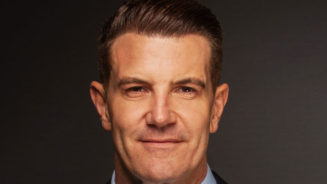
“We are not yet seeing the wholesale adoption of ETFs as an integral part of portfolio construction in Asia,” Bacon said.
“That’s not to say that in five years the picture won’t change, but in terms of demand from clients it’s relatively muted in the region at this juncture.”
Many ETF users are keen on concepts such as smart beta, which are more advanced in the US and Europe, he added. “In Asia, we’re at a very early stage of that sort of thinking – this region is still behind the curve in terms of the use of passive strategies.”
ETF assets globally stood at $2.97trn at the end of June, having taken in a record first-half net inflow of $152 billion, according to data provider ETFGI.
Fees vs commission
A key factor impeding the growth of ETFs is that Asia’s wealth management model is still mainly a commission-based one, and therefore advisors have less incentive to use cheap products like ETFs, said Marco Montanari, head of Deutsche Bank’s passive asset management for Asia Pacific, in a previous FSA interview.
EXS Capital in Hong Kong is among the few wealth managers using a fee-based discretionary model and therefore does not take commission on investment products. The firm invests exclusively in ETFs.
Jessica Cutrera, managing director of the firm’s wealth management arm, said 90% of active managers don’t beat their benchmarks on a long-term basis. “ETFs are a no-brainer,” she said in a recent FSA interview.
Steve Davies, chief executive of Singapore-based Javelin Wealth Management, is another active management skeptic, doubting that hedge funds deliver sufficient alpha for the fees they charge.
His boutique firm invests in mutual funds, but he likes ETFs for their simplicity and transparency. They account for around 40% of Javelin’s $100m in assets under advisory.
“Complexity is the enemy of portfolio return,” said Davies. “I don’t believe the case has been made for many new, complex products that they result in lower risk and higher returns. Hedge fund managers may disagree, but you only have to look at the numbers to see that this is the case.”
Active preference
Nonetheless, Joseph Leung, executive director at Alps Advisory, a Hong Kong-based multi-family office, said the client preference in Asia is for actively-managed products.
“Most Asian investors prefer active returns and therefore the allocation to passive vehicles remains small.”
There are reasons this could change, he added. “The changing dynamic of Asian ETFs will depend on the structural change of investors in the region.”
Investor flows could come to Hong Kong from China, for example. “If more Chinese institutions are allowed to invest overseas through QDII [Qualified Domestic Institutional Investor scheme] or other channels, it will speed up this process. I expect this will happen in the next few years.”