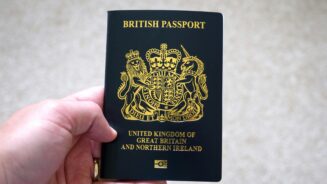
It’s not the end of the road for Brits who have aspirations to move to Europe, despite the clock ticking increasingly closer to the 31 January 2020 Brexit deadline.
From 1 February, the relationship between the European Union and the UK will enter a transition period.
What that means, according to European expat financial advisory firm Blevins Franks, is that Brits could still take advantage of this time and move to Europe, as EU laws would still be applicable at least until 31 December 2020.
Moving after the transition period, however, could become more difficult and expensive.
Have the right documents
As freedom of movement will still be applicable until an effective departure from the EU, UK citizens will be able to apply for a temporary residence card, which is renewable annually for five years, said Jason Porter, director of Blevins Franks.
“To qualify you would need to provide various forms of documentation, the most important of which are proof of medical insurance and proof of sufficient financial resources, so you are not deemed to be a burden on the member state’s social care system,” he said.
A full history of UK national insurance contributions – which can be obtained through an S1 form in the UK – should be sufficient evidence of medical insurance and will be enough to give expats access to medical care in the EU27.
But each country may have different requirements.
“If you arrive during the transitional period, you would have up to six months after it ends to obtain a residence card, if you haven’t already done so,” Porter added.
Minimum income
Things might become more difficult when it comes to providing evidence of having sufficient financial resources.
“The rule here derives from an EU directive which states: ‘In all cases this amount shall not be higher than the threshold below which nationals of the host member state become eligible for social assistance, or, where this criterion is not applicable, higher than the minimum social security pension paid by the host member state’,” Porter said.
But these criteria will only be applicable throughout 2020. It is still not clear what will be required once the UK has officially left the EU.
“Unfortunately, we are not certain what the ‘sufficient resources’ rules might be then,” Porter added.
“The expectation is that for those arriving pre-transition the requirements will be the same. But, for those arriving thereafter, they could become more difficult to satisfy.
“Also, one of the major fears is if the UK and EU cannot finally agree a deal. In this case the UK would become a ‘third state’ where the sufficient resources rules may become more onerous.”
Under third-state agreements, there is a minimum income level required, often set to the country’s minimum living wage.
In France, for instance, that sum is currently £18,250 ($23,824, €21,428) a year per person, not per household, Porter explained.
More difficult renewals
Additionally, if Brits are going to move after the split from the bloc, they will be required to apply for a residence card at the EU state’s embassy in the UK.
They are required to do so before the first three months of residence expire, but they won’t be able to apply in the European country itself.