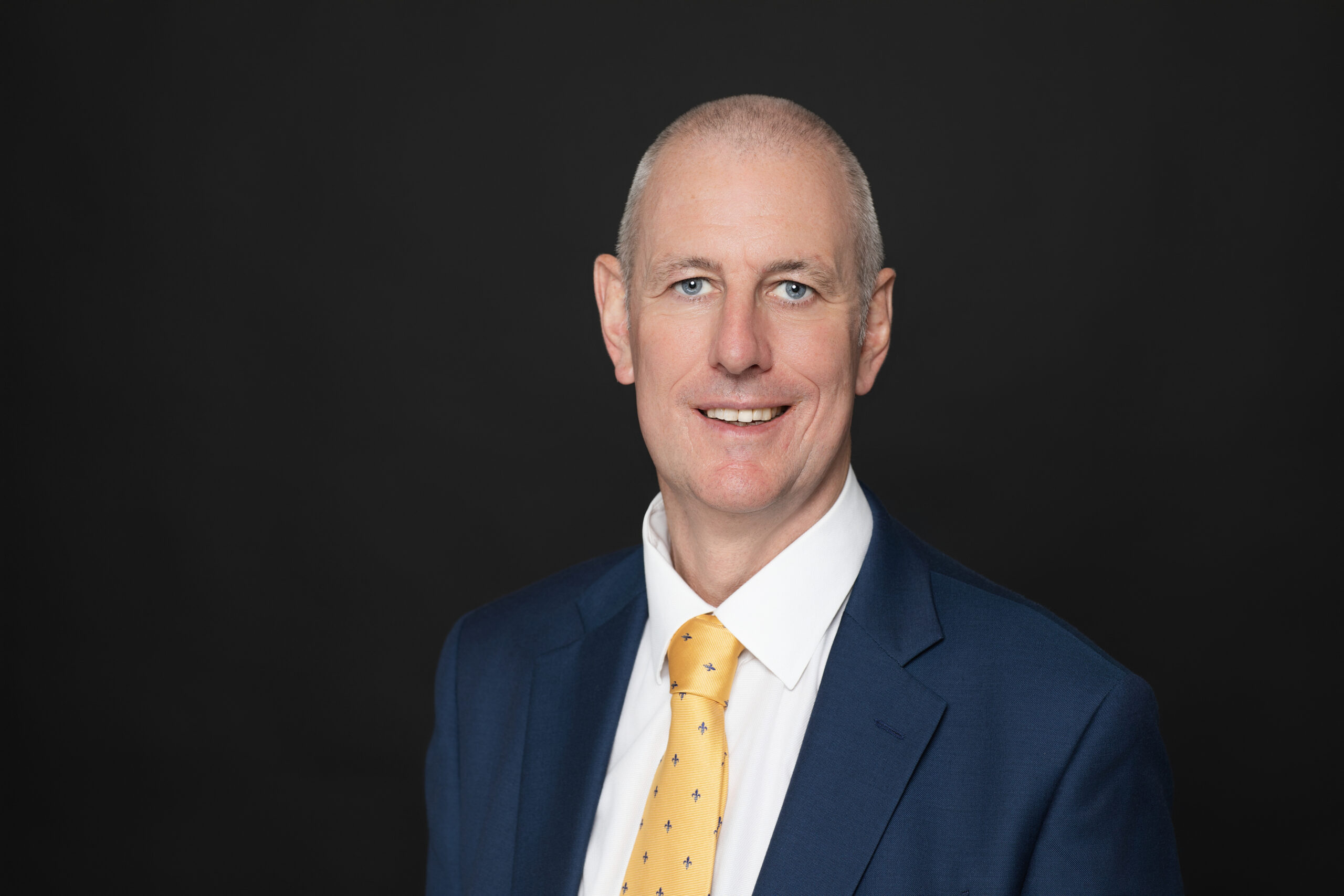
David Knights, Head of Distribution, Asia, at Investors Trust, talks to International Adviser publisher Gary Robinson about his move to Malaysia and Asian clients’ approach to long-term international financial planning.
GR: Hi David, how’s things going in Malaysia? What’s it been like since you moved over there?
DK: We relocated in April 2023, so it’s coming up to three years, and it’s just gone by in a flash. On a personal level, I’m really happy. 19 years in Hong Kong was great, but I was ready for a change.
From a business perspective, we’ve had a particularly strong year in Asia, and I’ve had the opportunity to build a really strong team here in Kuala Lumpur. Multilingual, talented people who understand what it means to support long-term advisory relationships, and who have positioned Investors Trust well to do exactly that across the region.
GR: Any strategic advantages of being in Malaysia?
DK: The biggest advantage is cohesion. Pretty much all of my team is now on one site, which has made us a much closer-knit group. Collaboration is stronger, and that feeds directly into the consistency of how Investors Trust supports its partners over time. We’re very lucky to have a great team.
GR: What’s the approach of Asian clients to long-term international financial planning, and how is that evolving?
DK: The big story is longevity, and allied to that, succession planning. There’s no one-size-fits-all in Asia. You have markets at very different levels of maturity and sophistication. But one thing that’s broadly consistent across the region is the focus on life expectancy, sustainable retirement, and legacy planning. That theme holds regardless of client segment, nationality, or territory.
What that tells us at Investors Trust is that clients are thinking in longer timeframes than ever before. The planning conversation has to match that. It’s not about products. It’s about structures that hold up over decades.
GR: How are advisers helping clients prepare for the transition from accumulation to decumulation?
DK: There are some obvious elements: reassessing risk appetite and moving from capital accumulation toward wealth preservation. But there’s also something less obvious: giving clients permission to spend.
Most people are conditioned into a savings mindset their whole lives, and that can create a real reluctance to begin decumulating, even when it’s appropriate. I see this regularly. People reach retirement and are almost afraid to draw on what they’ve built. One of the concerns is outliving your retirement provision. Another is health. People want to travel, pursue experiences, achieve things while they’re still well enough to do so. And longer-term care costs need to be factored in too.
Beyond financial reassessment, there are also legal and practical dimensions: power of attorney, long-term care arrangements, and how families manage if a client’s capacity changes over time. These are conversations that need to happen, and they sit squarely within the adviser’s responsibility.
There’s also a psychological dimension to the transition itself. It can feel like jumping off a cliff. One day you’re receiving a monthly salary, still thinking like a saver, and then suddenly you have to flip that entirely. That’s why many people transition gradually, perhaps moving to part-time work first. It feels less abrupt.
The adviser’s role here is as much psychological as it is financial, helping clients understand that a well-structured plan is designed to support this transition, not resist it.
GR: Does the adviser’s role evolve as clients move beyond the accumulation phase?
DK: It does, because priorities change. The ability to ask the right questions, to surface what’s really concerning a client, remains a critical skill, even in today’s AI-driven world.
And the longer the relationship, the more that skill compounds. At Investors Trust, we see this in how succession planning can bring the next generation into the picture, extending the advisory relationship across generations. That’s not a commercial observation. It’s what genuine long-term continuity looks like in practice.
GR: How do these discussions evolve in Asia around succession planning and intergenerational wealth?
DK: There’s generally good awareness in Asia of the need to plan ahead. One priority is creating structures that don’t fall directly into a client’s estate, particularly in jurisdictions like Malaysia, Singapore, and Hong Kong, where estate settlement under UK-based legal systems can take months or even years. For internationally mobile clients with assets across multiple jurisdictions, that complexity increases significantly without the right structures in place.
And in practical terms, one of the key questions becomes: if something happens, how are dependants supported in the period before an estate is fully settled?
Tax is also part of the discussion. It’s not just where the client is resident, but where their beneficiaries are. And the scale of what’s coming demands that advisers take this seriously. We’re looking at over $80 trillion changing hands over the next 20 years as the baby boomer and Gen X generations pass on their wealth. Getting the structure right now is what determines whether that transition holds.
GR: One thing that sticks in my mind after this conversation is how underprepared many people are for these transitions.
DK: You’re not alone. When you look at social media, the range of awareness is striking. Some people are very well prepared, but many are not, particularly around succession planning. There’s still a taboo in certain client segments around confronting mortality. But it’s a conversation that needs to happen. A good adviser won’t shy away from that.
GR: Any unique factors when dealing with Asian clients specifically?
DK: It’s difficult to generalise, and it varies by nationality and wealth level. But there is often a stronger family dimension in many Asian markets, with a more natural inclination toward multigenerational thinking.
Longer life expectancy has also fundamentally changed the planning equation. The traditional model of accumulating a pot and drawing it down over 10 to 15 years no longer holds. That pot may now need to last 20 to 30 years or more. Clients may need to remain invested, approach decumulation gradually, and maintain a structure that supports both sustainable income and a smooth transfer of wealth over time.
That ongoing need for structured, long-term guidance is what Investors Trust is built around, and what this stage of planning increasingly requires.
GR: Finally, Hong Kong. You were there for 19 years. Do you miss it?
DK: The Hong Kong I moved to in 2003 wasn’t the Hong Kong I left in 2023. On balance, the move to Southeast Asia was timely, and it’s been great, both personally and professionally.