There’s a question most successful investors never ask themselves. Not because it’s complicated, but because the answer might be uncomfortable. Was it strategy? Or was it luck?
For a decade or more, the distinction barely mattered. Concentrated positions in technology, property, crypto, private business – nearly everything worked. The environment rewarded conviction and punished caution. But the environment is changing, and that question is becoming harder to ignore.
Dumb luck versus good strategy
There’s a distinction that rarely gets made honestly in client conversations. A good strategy with a good outcome is deserved success. A bad strategy with a bad outcome is something close to justice. But a bad strategy with a good outcome? That’s dumb luck. And the problem with dumb luck is that it feels exactly like skill.
Over the past decade, ultra-low interest rates and abundant liquidity created conditions where growth stocks, particularly in technology, compounded at rates that historically would have been rare outliers. Almost any large technology position did well. The rising tide lifted nearly every boat. It was easy to conclude the strategy was brilliant, rather than that the environment was unusually forgiving.
That environment is shifting. Some of the biggest names in tech and AI have already fallen significantly from their peaks, while broader market indices have held up. That divergence is precisely the point. Concentration risk works both ways. When the giants stumble, the diversified investor barely notices. The concentrated investor feels it immediately.
The two stories that explain everything
I worked with a family last year who sold their logistics business for a significant sum. When we mapped their full financial picture, almost everything outside the business sat in cash, held there in case the business ever needed it. They’d concentrated their way to wealth, as many successful families do. The problem was that the asset they’d concentrated in after the exit, cash, was being quietly eroded by inflation every day. Wealth preserved on paper. Shrinking in reality.
A different client had built considerable wealth through Bitcoin. The gains were real. But staying fully concentrated in a single volatile asset meant placing everything in a fragile basket. The solution wasn’t to abandon what had worked. It was to build around it: a playpen for speculative positions he believed in, a war chest for near-term family expenditure, and a fortress of diversified long-term assets to ensure the family’s future didn’t depend on any single outcome going right.
Both families had the same underlying challenge. The strategy that created their wealth was no longer the right strategy for protecting and growing it.
What Nobel laureate Harry Markowitz understood
Markowitz called diversification the only free lunch in investing. You can reduce portfolio risk without sacrificing potential returns. That’s a genuinely rare outcome in finance. But it requires tolerating varied performance across different asset classes and different cycles, which means letting go of winners. And that’s psychologically hard for anyone who built their wealth by backing themselves.
Diversification isn’t a story you tell at dinner parties. Nobody brags about their balanced allocation. But the families who sleep well, who weather downturns without anxiety, and who actually reach their long-term goals are nearly always the ones who found the right balance between concentration and diversification.
What to tell your clients
The honest conversation with any client who’s built wealth through concentration starts here: the market regimes that rewarded their approach won’t last indefinitely. Leadership rotates. What worked brilliantly can stop working suddenly.
The question isn’t whether to abandon concentration entirely. It’s whether their current structure is genuinely built for the next chapter, not just the last one. A financial life manager’s job in this conversation isn’t to take credit for a good run. It’s to ensure one change in conditions doesn’t undo years of accumulated wealth.
Watch the full analysis here:
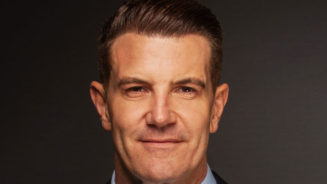
Sam Instone is CEO of AES International, the only CEFEX-certified fiduciary firm across the Middle East, Asia, and Africa.
Capital at risk. Any examples used are for illustrative purposes only, and you may get less back than the figures shown. Any financial promotions are intended for information purposes only and do not constitute an offer to invest or provide personal financial advice or tax advice. We do not take any responsibility for third-party websites and content linked to from this channel. Issued on behalf of AES Middle East Insurance Broker LLC, registered with the Ministry of the Economy, licence 571368, commercial registration 75162, regulated by the UAE Central Bank, licence no. 189. This material is intended for Retail Clients within the UAE.