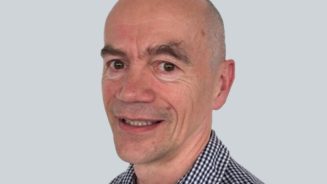
As a hedge fund manager, Vaibhav Jain’s take on asset allocation is to be market-neutral and, in consequence, to apply a totally different approach to the typical bonds and equities portfolio manager.
“We are trying to educate people about the sector we are in. When you say ‘market-neutral’, people first tend to think ‘fixed deposit’. That is the only thing they believe can survive a crash and boom, but it is not like that,” he says.
Jain is one of the founders of Infini Asset Management, an offshoot of the Dubai-based family office group business his father has chaired for many years.
He explains that the decision to set up the hedge fund stemmed from a realisation as far back as 15 years ago that at least 20-25% of a portfolio needed to be in unrelated, market-neutral products.
"I am dramatically diversified all across the world"
Strategy and structure
“It is very difficult to find unrelated entities nowadays. So, we started working on derivatives and how we could produce a truly market-neutral structure. I was on the floor of the Chicago Mercantile Exchange learning derivatives, and we started developing a strategy that could give us potentially good returns.”
The fund invests in the 19 biggest futures and options markets in the world, covering everything from crude oil and natural gas, to stock indices, soya, Treasuries, sugar, coffee, metals and currencies.
In 2008, for example, as a family office, all of Infini’s other portfolios were down by as much as 60%, but the hedge strategy, which has subsequently morphed into a fund, was down by 2%.
Once confident of the strategy and infrastructure, the fund started accepting third-party capital in 2014.
Despite having a market-neutral stance, Jain points out that the derivatives market can experience “black swan events at any time”, and that is the reason why he limits each sector to 10%.
Black swans in this context are occurrences that deviate beyond what is normally expected of a situation, which would be difficult to predict.
In mid-May, he was a little overweight in energy and also in Treasuries, because the option prices were attractive. “Crude oil is the favourite,” he says. “It has done very well for us because ups and downs do not matter. Crude has been crashing or rising, which is perfect for us.
“I make a conscious effort to stay away from trying to predict the delta or the price.”
Treasury stocks have not been volatile for a long time, which still works well for the strategy. “If it is quiet, our hedging cost goes down and the premiums are quite high, which is good.”
By contrast, he labels grains as a seasonal sector, when for four or five months of the year nothing happens.
“It is not a great time to be in grains if nothing is happening, but every now and then there are crop reports or, say, a bad virus in Brazil. Prices tend to start jumping about a bit and the premiums rise, which is the right time for us to go in and take advantage of that. This also applies to wheat and corn.”
As for currencies and stocks, he is underweight because volatility is too high, although he says the position keeps changing, which is why he covers 19 sectors, of which 10 or 12 are active.
Specifically in relation to currencies, Jain only trades in the yen and the euro, which he says crashed for some time and has since been in a tight trading range.
He describes four kinds of basic markets, namely bearish, bullish, quiet and “volatile but not heading anywhere”, from which he tends to choose from the first three.
“We do not like the fourth category, which is just choppy and not really going anywhere, just moving by 2-3% each day.”
Metals in the quiet category are weighted to gold, which has the virtue of being liquid. “We need liquidity to really take advantage of what we do. It is a weaker strategy, and gold is perfect for that.”
Coffee is also in the quiet category, having been in both bearish and bullish categories in recent months.