Despite just a small rise in UK consumer price inflation in January, investors are still being warned that inflationary forces both in the UK and more globally, could spike later in the year.
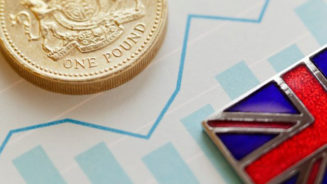
Having risen 0.6% in December, UK Consumer Price Index (CPI) inflation was up 0.7% over the year to January.
While this not be the surge many had been predicting, it is evidence of further tentative signs of inflation creeping upwards.
“Inflation has started 2021 in much the same vein as it finished 2020, low and moving sideways,” said Laith Khalaf, a financial analyst at AJ Bell.
“The fact that restaurants and hotels provided a large upward pressure on CPI, despite largely being shuttered in January, provides ample cause for caution when interpreting broad economic indicators in a world where activity has been so horribly distorted by lockdown,” he added.
Inflation versus deflation
As such, while the headline CPI rate is “glacially cool”, Khalaf said the debate between inflation and deflation continues to rage.
For Khalaf, there are arguments for both.
“Commodity prices have been creeping up, and the market seems to be buying into a global economic recovery, with cyclical stocks performing well,” he said. “Combined with the huge amount of monetary and fiscal stimulus pumped into the economy, that suggests that inflationary pressures may be brewing.”
However, he added that the deflationary argument is also compelling.
“Unemployment is set to rise, global governments are going to have to raise taxes to pay back their massive debt mountains, and technology is going to continue to push costs down,” he said.
“On top of that; sterling has been on the charge, which reduces UK import prices and hence keeps inflationary pressures at bay.”
Oliver Blackbourn, a multi asset portfolio manager at Janus Henderson, said one of the factors which has kept inflation at bay in the UK in recent months is the stall in the economic recovery either side of the turn of the year.
However, he added that expectations are for a rebound into the end of this year, with the potential for inflation to return close to the Bank of England’s 2% target.
“As always, when exiting a recession there are competing factors at play when it comes to price pressures,” he said. “However, gilt yields have clearly responded to a more positive growth outlooks from the swift roll out of vaccines and the BoE indications that it does not expect to use negative interest rates any time soon.”
Coiled spring
Blackbourn said the reopening of the economy in response to the roll out of vaccines may lead to unemployment rising as those that have been kept on furlough schemes are deemed surplus to requirements.
This, he noted, would create a drag on demand and therefore inflation.
“However, the BoE’s chief economist has described the economy as like a ‘coiled spring’ with the end of restrictions likely to release pent up demand,” he added. “A spike in the savings rate last year suggests that those that have remained employed will have money to spend once a degree of normality returns.”
If this is the case, Blackbourn said a surge in consumption may lead to prices rising as service companies take time to return to full operations. Meanwhile, he added that factors such as an end to the hospitality VAT cut and rise in the domestic energy bill price cap, are also likely to help inflation bounce throughout the rest of 2021.
So would be the implications on various assets of a rise in inflation?
Sean Markowicz, a global strategist at Schroders, said bonds are the obvious casualty.
“Their fixed stream of interest payments become less valuable as the overall cost of goods and services accelerates, sending yields higher and bond prices lower to compensate,” he said.
“Equities may sound more enticing because, in theory, a rise in prices should correspond to a rise in nominal revenues and therefore boost share prices,” he added. “On the other hand, this may be offset by a contraction in profit margins given an increase in companies’ input costs.”
What’s more, Blackbourn noted that the market will often discount those future cash flows at a higher rate when inflation rises to compensate for the fact they are worth less in today’s money.
The inflation hedge
Another option for investors is to use assets that hedge against inflation, namely an investment that provides protection against price increase.
However Blackbourn warns such assets don’t come without risks.
“Incorporating an inflation-hedging asset into a portfolio is no free lunch, as it may increase a portfolio’s risk profile,” he said. “For example, although Reits and commodities have more desirable inflation-hedging properties, this is likely to come at the expense of more volatile portfolio returns.
“Treasury Inflation Protected Securities (Tips), on the other hand, are historically less volatile. These implicit costs should not be ignored and should be factored into asset allocation decisions.”
For Blackbourn, the key is that investors must decide how much inflation protection they desire and what implicit costs they are willing to tolerate.
“Regardless, whichever inflation scenario unfolds, traditional equity and bond investors have a lot at stake and cannot afford to be complacent,” he said.