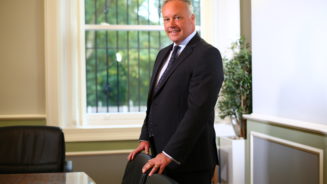
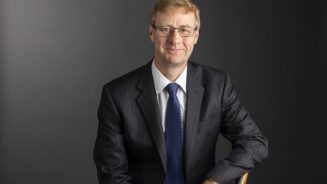
“People are losing confidence in the idea that there is a roadmap to recovery, which has underpinned a lot of the rise in equities and the smooth passage of capital into markets the last few years,” Leyland said, on a recent trip to Hong Kong.
“When that changes and capital goes out due to a loss of confidence, it’s always chaotic. The exit of positions that started in the middle of last year is a defining feature of a different phase in markets.”
Volatility is welcome
However, Leyland likes volatile environments because he believes his portfolio has a “quality bias” to protect the downside while he can use hoarded cash to invest patiently at low valuations. His fund currently holds 15% in cash (out of a 20% limit), which he aims to invest selectively.
Currently he’s seeing opportunities in resources (select mining stocks) and emerging markets, where he seeks strong franchises, preferably exporters with low valuations.
"You should be getting more, not less excited about investing in equities right now"
“You should be getting more, not less excited about investing in equities right now,” he said. “Falling prices mean better value, but you have to be selective.”
The fund has a concentrated portfolio of 25-40 stocks that he and deputy manager Robert Lancastle are confident will have compounded growth over the long term, perhaps a decade or more. That involves researching hundreds, not thousands of companies, he said.
The portfolio is mostly large-cap developed country multinationals, though the fund can invest globally.
The most important aspects when assessing a company are barriers to entry and franchise value, Leyland said. For example, companies with high intellectual property content or brand-driven businesses. Software and services have been the core of the portfolio, particularly what he calls “boring companies”. Oracle, for example, is the fund’s top holding (4.1%).
“Software and services companies benefit from secular tailwinds of digitisation and they tend to have sticky customers. They are also attractively valued and have strong growth drivers.”
Because he looks for diversified companies with long-term structural growth, he believes large macro events will not undermine his confidence in the portfolio.
“Macro events such as a Brexit shouldn’t effect barriers to entry of companies I look at. Whether the UK is in or out of the European Union won’t impact software companies in the portfolio.
“There would be short term effects, but that won’t undermine the value of the businesses.”
________________________________________________________________________________________
Ben Leyland is a designated FE Alpha Manager.
“Overall, performing better than the peer group composite,” according to FE. “Good stock-picking has had a material positive impact on results.”
However, he has been managing the fund for a relatively short period (since 2012) and not been particularly exposed to falling markets, according to FE.
Cumulative performance vs peer group

Source: FE
The fund has performed well over the trailing three years, particularly during the last six months of global market volatility: