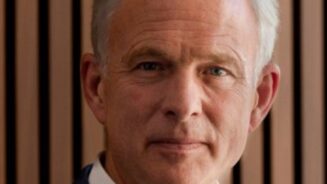
UBP this month closed the acquisition of Coutts’ wealth management operations in Hong Kong and Singapore, which brought $9bn (£6.3bn, €7.9bn) to the bank’s platform.
However, “Coutts didn’t sell the Queen,” de Picciotto said, on a recent trip to Hong Kong with UBP executives. He was referring to the UK arm of Coutts, which includes Britain’s royal family among its clients and will remain under the control of parent bank RBS.
In Asia, UBP now has $14.5bn (CHF14bn) in asset management and private banking assets combined, or roughly 10% of global AUM ($130bn), said de Picciotto.
Asia wealth market `infinite’
UBP’s acquisition contrasts with the strategies of some other private banks in the region. Falcon Private Bank in 2014 sold its Hong Kong wealth management business, and earlier this year Barclays sold its Asia wealth management unit. JP Morgan recently reported it would scale down its Asia wealth management team.
"If regulators are launching investigations on offshore companies, I hope they will do the same in US. The offshore Delaware companies don’t even register the beneficial owner if he’s foreign"
De Picciotto doesn’t believe the activity signals market decline. “Competition will be fierce” among private banks in Asia because the market is strong, he said, citing Asia and the Middle East as the two strongest growth regions globally for asset and wealth management.
“The heavy investments many competitors did lately [in Asia] had to be rescaled, but that doesn’t change the outlook for Asia.
“The Asia market is huge and still growing. The wealth market is infinite. The constraint is certainly on the bankers. There are not sufficient bankers for all the wealth in the Asia market. So the burden is on the banks, on how to attract and grow and retain the talent.”
The bank now has around 60 relationship managers in Asia and de Picciotto said he hopes to reach 100 within two years.
He said UBP can attract the right people, and there is no limitation to expansion in Asia based on a talent shortage. “Without a bank presence in the region, it would have been difficult to hire.”
China target market
Michel Longhini, CEO of private banking, said the China market has the largest potential in Asia and UBP is planning to expand its regional team for stronger coverage of the mainland market. It has a China equities focused team and last year, the bank set up a joint venture with China-based wealth manager Noah Holdings to work on product development.
“[Noah’s] expertise is important to us as an entry point to the China market. On our side, we have China equity expertise and international experience,” Longhini said.
Though UBP has been set up in Singapore since the 1990s, its Asia wealth management business didn’t get going until the Coutts acquisition some 20 years later.
About 15% of wealth management business in Asia is discretionary, de Picciotto said. “We would expect in the future to have discretionary overtake advisory. Because of regulations, it would be beneficial for both bank and client to move toward discretionary portfolio management. But I understand there is a cultural obstacle and this will take time to realise.”
The bank has its own funds, and uses what de Picciotto calls “guided architecture”, meaning the use of UBP funds is encouraged in internal wealth management but there is no active push to do so, he explained.
In Hong Kong, where UBP recently received its banking licence, the asset management industry is more developed than in Singapore, de Picciotto said.
However, the rivalry between Hong Kong and Singapore for the Asia financial center crown has been overplayed, added Longhini. Asian wealth creation is growing at 10% per year, and each jurisdiction brings advantages.
“It is not a zero sum game,” Longhini said. There are advantages to having booking centers in both Hong Kong and Singapore. If we thought one would `win’ at some point, we wouldn’t have two booking centers.”
Panama Papers and fintech
De Picciotto said that the recent Panama Papers scandal is another sign of the general trend toward transparency and a crackdown on paying taxes, but he doesn’t believe increased regulatory scrutiny of offshore tax havens will have an impact on banks.
“Offshore is just the vehicle. What’s important is the beneficial owner, the underlying client. We are confident in our processes [to assess the] beneficial owner and do not need more checks on offshore [entities].
“If regulators are launching investigations on offshore companies, I hope they will do the same in US. The offshore Delaware companies don’t even register the beneficial owner if he’s foreign.”
De Picciotto also said he welcomes peer-to-peer lending and other fintech developments to help reduce the burden of what private banks currently do. Robo-advisers he sees as a supplement rather than a disruptor to wealth management.
He used the analogy of a patient being diagnosed by a machine that uncovers ailments.
“At the end of day, you will still want to see a doctor – any doctor, even if he’s a bad one.”