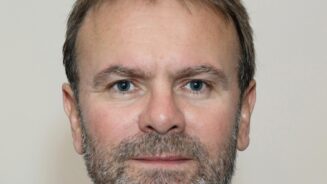
Brian Spence, founding partner of HSP Consulting, shares his experience of leaving his UK advice business and moving to Vietnam, and what he learned in the process.
I was born in Sunderland — a city that knows something about resilience. If you follow English football, you already understand what that means. If you don’t, trust me, it teaches you patience, stubbornness, and the peculiar faith that things eventually come good. That spirit has stayed with me longer than I ever expected.
I spent decades in financial services and mergers and acquisitions in the UK. I built a business, sold it, and assumed the next chapter would arrive with some sense of direction attached. What actually arrived was my wife, who pointed out — very reasonably — that she had spent years supporting a family that revolved around my work. She wanted to spend our golden years in Southeast Asia. It wasn’t a difficult decision, though I’m not sure either of us truly understood what we were walking into.
We moved to Hanoi just over a decade ago. In my first week, I did what I always do when I know absolutely nothing — I found someone who did. I tracked down Chris Jeffries, the principal of the British University in Hanoi, a man I had never met, and asked for an hour of his time. I told him I was a complete Vietnamese virgin and needed an honest assessment of what I was walking into.
He didn’t hesitate. “Brian,” he said, “you just need the Dunkirk spirit. You won’t make a profit for five years. But if you stay, the Vietnamese will take you seriously.”
Had I known it would actually be ten years, not five, I’m not certain I would have come. I was already sixty-three. Life expectancy is finite. But that’s the thing about the Dunkirk spirit — you don’t get to know the timeline in advance.
The IFA beginning
I started with what I knew — financial advisory work for expats. It made sense. I had the experience. There was a market. For a while, it worked. But then COVID arrived and changed everything in ways nobody could have anticipated.
Everyone went home. Just like that. The expats disappeared. Corporate entities packed up. The IFA business came to a complete halt. And suddenly, the question wasn’t abstract anymore — it was immediate and real. Do we go home too? Do we cut our losses and admit this was a mistake?
We didn’t. We remembered what Chris Jeffries had said.
The pivot
With the IFA work gone, we looked at what else might work in Vietnam. Consulting became the avenue. We realised that Vietnamese businesses — many of them family-run, mum-and-pop operations — had something in common: their shop window looked poor. Their presentation to
the outside world didn’t match their potential. We could help with that. We could improve their visibility, their structure, their appeal.
That led naturally toward mergers and acquisitions. If we could make these businesses look better, present themselves better, we could bring in corporate targets. That was the theory.
But we ran into a wall — the Vietnamese business mentality itself.
These weren’t just operational problems. The issue ran deeper. Vietnamese business owners, by and large, held the reins tightly. They were directive, controlling, not intuitive about delegation. They didn’t allow others to take real control. That might work for a family business, but it’s poison to anyone trying to acquire you. No corporate is going to buy into that. No serious buyer looks at a business where the owner won’t let go.
We were stuck. We had the consulting framework, we had the M&A opportunities, but we couldn’t bridge the gap between what these businesses needed to become and what their owners were willing to be.
For a while, we floundered. We tried different approaches. Nothing quite worked. It felt like we were gardeners trying to figure out which plants like shade, which ones need water, which ones will actually grow in Vietnamese soil. We were learning by trial and error, and the error part was frequent.
Then we discovered coaching.
The transformation
We became the exclusive franchise holder in Vietnam for Erickson Coaching International — one of the biggest coaching businesses in the world, built on a solution-focused model. And everything changed.
What we realised was this: the Vietnamese business owners didn’t need better spreadsheets or sharper presentations. They needed a mentality shift. They needed to see things without blinkers on. They needed to understand that the way they’d always done things — the tight control, the directive approach, the resistance to delegation — wasn’t a strength in this new world. It was a cork in a bottle.
Coaching pulled that cork out.
Suddenly, these business owners began to see themselves as others saw them. They started to understand what needed to change. And when they did, something remarkable happened — their businesses flourished. They made more money. They actually enjoyed what they were doing. The tension that had been baked into their leadership style dissolved.
The coaching transformed the consulting business. It transformed the M&A work. It transformed everything because we’d finally found the missing piece. We weren’t just fixing structures — we were shifting how people thought.
Building the team
Through all of this — the uncertainty, the pivots, the failed attempts — we weren’t alone. Over time, three or four individuals joined us and became integral to what we were building. They saw the struggle. They saw the Dunkirk spirit in action. They stuck around through the hard years because they believed in what we were doing, even when the direction wasn’t clear.
As time went on, they became partners. They became shareholders. They moved from employees to co-owners of the vision. That bond — forged through genuine adversity and real uncertainty — has been one of the most encouraging parts of this journey. These aren’t people who joined a successful company. They’re people who built one alongside us, who lived through the risk and the adaptation and now get to see the results of that resilience.
Coming full circle
Here’s where it gets interesting. The IFA business — the thing that stopped dead when COVID hit — is beginning to thrive again. Expats are back. The market is moving. We’re now doing M&A work across every sector here in Vietnam, tidying up companies and bringing in buyers. And simultaneously, we’re expanding into financial services mergers and acquisitions across Southeast Asia, drawing directly on the expertise I built decades ago in the UK. We’ve come full circle, but it’s not the same circle. We’ve accumulated knowledge, built a team, discovered what actually works, and we’re applying it on multiple fronts and across multiple geographies.
What I know now
At seventy-three, looking back at the sixty-three-year-old who arrived in Hanoi knowing nothing, I wouldn’t tell him not to worry. I would tell him to prepare for uncertainty. I would tell him that the timeline will be longer than he thinks. I would tell him that failure isn’t final — it’s information. I would tell him that the people he builds with matter more than the plan he started with. And I would tell him that the Dunkirk spirit isn’t just about surviving. It’s about adapting, learning, and eventually thriving in ways you couldn’t have imagined when you started.
That’s what these ten years have been. Risk, adaptation, disappointment, happiness, teamwork. A story of endurance that’s still being written.
Brian Harrison Spence is founding partner of HSP Consulting, advising expatriate clients and businesses across Vietnam and Southeast Asia in financial planning, coaching, consulting, and mergers and acquisitions.