The decision that will most determine how wealthy your clients are at retirement isn’t how much they save. It’s how they invest. And after decades working with successful families, the most consistent problem I see isn’t a lack of capital. It’s an outdated investment mindset running on decades-old assumptions.
The industry ignores evidence that’s won Nobel Prizes
Peer-reviewed academic research on how markets actually work has existed since the 1950s. Eugene Fama’s efficient market hypothesis, Kenneth French’s factor model, Robert Merton, Myron Scholes, Douglas Diamond. Nobel laureates, all of them. The evidence is robust, extensively tested, and freely available.
Most of the traditional financial services industry ignores it. Private bankers, brokers, and conventional advisers typically push expensive, opaque products that reward the seller rather than the client. Many of these people are charming and well-meaning. But when their livelihood depends on not fully acknowledging the evidence, commission incentives and disguised remuneration tend to win.
A small number of certified investment fiduciaries operate differently, following practices grounded in what the evidence actually supports.
Investment science has moved on. Most investors haven’t.
Think about how phones have evolved in a single lifetime. My grandmother called her stockbroker on a dial-up telephone, picking individual shares based on a morning newspaper. My father’s generation moved to mutual funds, broader diversification, better average returns. The Blackberry era brought index funds, which removed the drag of active fund manager error and cost.
Today, Nobel Prize-winning research shows that certain factors within index funds can produce higher expected returns, and that a systematic approach to portfolio construction can capture those premiums over time.
That’s the current operating system. But many investors I meet are still running software from 1985. Some are still stock picking. Some are sitting in the expensive active funds of the 1990s. Very few are aware of evidence-based or systematic investment approaches. The drift this causes compounds silently across a lifetime and the cost, run through analytical software, routinely runs into millions.
What investing actually is, and what it isn’t
The traditional industry conditions people to think investing is about spotting the next opportunity, timing entries and exits, and beating the market. That mindset is why so many investors underperform. It’s been statistically proven as ineffective, and it can be deeply damaging.
Investing, done properly, is the long-term process of preserving and growing future purchasing power to fund the life and choices your clients want. Retiring earlier. Spending more time with family. Supporting causes they care about. Having genuine freedom. Not investing means the value of money goes backwards, invisibly, through inflation. Cash in the bank feels safe today and quietly erodes the future.
A client came to us after years of picking his own stocks. He’d had early wins and got hooked on the exhilaration of it. When we ran his history through our analytical software, the compounded opportunity cost of his decisions ran into several million pounds. He hadn’t been reckless. He’d just been running the wrong system.
A four-step framework worth sharing with clients
The solution isn’t complex, but it does require structure. Four steps consistently separate disciplined family investors from those who drift.
First, build the foundation on up-to-date academic research, peer-reviewed theory from institutions like Harvard, Yale, and the Chicago School of Business, not from Wall Street brochures. Second, define a written investment philosophy that codifies beliefs around risk, expected returns, and the discipline required to stay the course when markets are uncomfortable. Third, implement through a rules-based process. At AES, we start with over 800,000 funds globally, filter by evidence, diversification, cost, transparency, and liquidity, and work down to a handful of rigorously reviewed options. Forget brand names and performance charts. Structure and rigour drive the selection. Fourth, govern the process continuously. Review regularly, adapt to new evidence, course correct without abandoning the core philosophy.
A good process with a bad short-term outcome is usually a bad break you’ll recover from. A bad process with a good outcome is dumb luck, and it creates the kind of overconfidence that causes the most serious long-term damage.
What to tell your clients
The question most clients haven’t been asked is whether their investment approach reflects what the evidence actually supports, or what their bank or broker finds easiest to sell. Those are very different things.
A useful starting point: ask them when they last updated their investment thinking. If the answer is “when I set up my portfolio,” the operating system almost certainly needs an upgrade.
Watch the full analysis below:
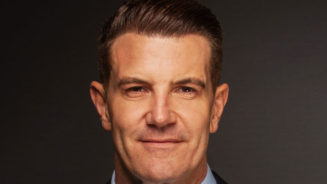
Sam Instone is CEO of AES International, the only CEFEX-certified fiduciary firm across the Middle East, Asia, and Africa.
Capital at risk. Any examples used are for illustrative purposes only, and you may get less back than the figures shown. Any financial promotions are intended for information purposes only and do not constitute an offer to invest or provide personal financial advice or tax advice. We do not take any responsibility for third-party websites and content linked to from this channel. Issued on behalf of AES Middle East Insurance Broker LLC, registered with the Ministry of the Economy, licence 571368, commercial registration 75162, regulated by the UAE Central Bank, licence no. 189. This material is intended for Retail Clients within the UAE.