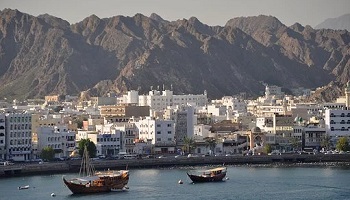
The swift appointment of Haitham bin Tariq as the Sultan of Oman, following the death of Sultan Qaabos, has eased fears that the country would enter a prolonged period of political uncertainty, says Jason Tuvey, senior emerging markets economist at Capital Economics.
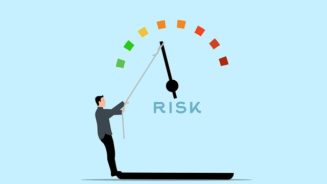
But the new leader faces a difficult task of securing financial support from its neighbours in order to maintain the dollar peg. At the very least fiscal austerity will need to continue and we think that it will be the Gulf’s worst performing economy over the next couple of years.
Oman’s Sultan Qaboos passed away on 10 January, having ruled the country for almost 50 years. Fears that his death would herald a period of political uncertainty have receded after the ruling family opened an envelope in which Sultan Qaboos (who had no children or brothers) had written down his designated heir.
Sultan Qaabos’ first cousin Haitham bin Tariq, who was previously culture minister and before that a key official in the foreign ministry, was sworn in as Sultan on Saturday. Investors have welcomed the swift transition – yields on Oman’s 2029 dollar bond dropped by just over 20bp on the news.
Neutral stance
On the political front, the new sultan has declared that he will follow the path laid out by his predecessor.
Under Sultan Qaboos, Oman carved out a position as the “Switzerland of the Middle East”, maintaining a neutral stance and acting as a key mediator in regional disputes.
Indeed, Oman has previously acted as go between the US and Iran. While Sultan Haitham has pledged continuity, there is clearly more uncertainty over the direction of Oman’s foreign policy than before.
Sultan Haitham inherits a wide-ranging portfolio of responsibilities. As well as being head of state, he also takes on the position of prime minister, finance minister, foreign minister and defence minister, as well as supreme commander of the armed forces.
It remains to be seen whether Sultan Haitham relinquishes some of his responsibilities to other members of the royal family or technocrats.
Low forecast for growth
Sultan Haitham’s biggest domestic challenges will centre on the economy. Oman was in a poor position to withstand the oil price fall in mid-2014 and has run persistently large budget and current account deficits ever since.
To finance these deficits, the authorities have relied on debt issuance and the government debt-to-GDP ratio has jumped from 5% in 2014 to 60% of GDP now.
The rapid rise in debt and Oman’s low foreign exchange savings have raised fears over the sustainability of the dollar peg. Combined, FX reserves and sovereign wealth fund assets stand at around 50% of GDP, much lower than in the rest of the Gulf (except for Bahrain).
And whereas Bahrain has already secured financing from its neighbours, Oman’s political neutrality means that help is by no means guaranteed. For our part, though, we think that the likes of Kuwait and Qatar will come forward with support.
Even if the dollar peg remains intact, fiscal austerity will stay at the top of the agenda as the authorities try to address economic imbalances.
Some progress has been made in recent years, but much more needs to be done – we estimate a fiscal squeeze of 13% of GDP is needed to stabilise the debt ratio.
Next year’s scheduled introduction of a new value-added tax will be a key test of the sultan’s commitment to austerity.
Against this backdrop, the economy will struggle. We have pencilled in GDP growth of 0.5% this year and 0.8% in 2021. Our forecasts lie well below the consensus, which anticipates growth of closer to 2.5-3.0%.