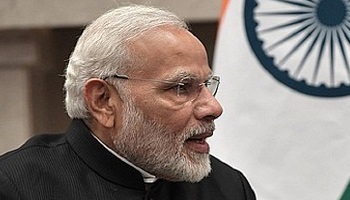
Leading asset managers are unsurprisingly positive about the prospects for India in the light of prime minister Modi’s historic election win.
But the devil is in the detail and the views of four specialist Indian asset managers below give reaction and next steps.
Binay Chandgothia, head of Asia, managing director and portfolio manager for Principal Portfolio Strategies said: “Election outcomes do not play a dominant long-term asset allocation role, based on our analysis of historical election cycles, though they do create a fair bit of volatility in the near term.
“In this case, the reaction to NDA’s victory has been viewed positively (yields are down an extra 7-8 bps relative to US treasuries) while INR/USD has outperformed most other currencies in Asia this month since the start of the year.
The current carry from Indian 10-year yields, relative to US 10-year treasuries, at around 480bps is very close to the long-term median of 465bps, implying they are fairly valued on a relative basis, especially in an environment of low global yields.
“In our base case, we expect yields to be fairly stable though they may go down some more, driven by the lower yield environment globally. The other side of this carry trade is FX volatility where oil prices, fiscal policy and the growth outlook become very important. Historically, the INR has depreciated at an annual pace of 3% against the USD over long time periods, in line with the inflation differentials based on PPI (producer price inflation). This has ensured that the Indian Rupee has remained competitive from an export perspective.
“In the medium term, we think the flow picture for Indian assets will be driven by the outlook on Indian FX, fiscal policy and growth outlook. The outlook for the Rupee and Indian yields will be shaped by the interactions between inflation (oil prices and fiscal policy are extremely important) and the growth trajectory (primarily domestic but also global).
“We expect the short-term market reaction to the election outcomes to fade soon, with the medium-term outlook on growth/inflation taking over. That, in large part, will be driven by the policies implemented by the government in its second term.”
Ankit Sancheti, investment manager at Kotak Mahindra Asset Management (Singapore) said:
“All eyes are now focused on the policy narrative which the Government will set for its forthcoming term. In the immediate future, reviving economic growth will be the key priority. Fine tuning of existing reforms like GST, bankruptcy code, direct taxes etc. will also be high up on the Government’s economic agenda.
“Given the Government’s resolve to follow fiscal consolidation path, the leeway for a large stimulus is limited. As such, we can expect sector specific (like housing) stimulus to revive economic growth.
“On the monetary policy RBI is expected to continue with its easing stance given that inflation is well below the medium-term target as set by the RBI Monetary Policy Committee. It is also expected to take some more steps to improve the systemic liquidity. So far, RBI has used OMOs and forex swaps to infuse liquidity into the system. We would need to wait and watch which tools will be used further.
“We would also await the outcome of the report of the Committee headed by Bimal Jalan on the excess capital of RBI. If the committee so does decide that there is excess capital on the balance sheets of RBI (we would await the same) and this can be returned to the centre, it could be used for boosting infrastructure or for re-capitalising PSU banks, which can have multiplier effect.
“Infrastructure spends have been a key area for the Government in the past 5 years and we expect the pace to further gain momentum with focus on improving road and rail network. Going by the party manifesto, the government is aiming at investing US$ 1 trillion to create modern infrastructure. This will be supported by revival in private capex given improving capacity utilization across industries along with stable Government. The confluence of both public and private sector capex is expected to kick start the investment cycle in India.
“With the political uncertainty now behind, the market focus will shift back to reforms, economic growth and corporate earnings. The allocation of key ministry in the new Government including the appointment of the Finance Minister is now keenly awaited. The outcome of the union cabinet will be known in coming week or so. The Union Budget will be the first formal policy document which is likely to be presented in July 2019 and the same will detail the fiscal targets of the government.
“The formation of stable government is likely to improve in market sentiment & risk appetite. Given the under-performance of mid and small caps in last 12 to 18 months, the relative valuation differential have now got bridged and the starting point of investing in mid / small cap space is more reasonable.”
Sandeep Kothari, Portfolio Advisor for the Fidelity India Focus Fund said:
“Given the ongoing clean-up in public sector bank balance sheets as well as the reduction in corporate debt levels, I expect private sector capex cycle to revive in the next 12-15 months.
“Overall, I expect that this historic mandate for a strong and decisive government will help take India’s reform process forward and improve the country’s growth prospects.
“The equity market has reacted positively after the exit polls suggested a BJP victory, and given that we have seen flat earnings growth in the last five years, the market is likely to start discounting an earnings revival in the next few months.”
Nick Payne, head of global emerging markets, Merian Global Investors, said: “The nature of Prime Minister Narendra Modi’s overwhelming victory is, in our view, positive for the investment backdrop in India. Modi is likely to continue to push forward his much-needed reform agenda, after seeing success in recent years with demonetisation, overhauled bankruptcy laws and unified goods and service taxation.
“At first glance, Indian equities currently look quite expensive; however there are some great companies that offer compelling opportunities for investors to tap into that exciting future. We like HDFC Bank and Godrej Consumer Products.”